Love & Relationships
A couple may move beyond conflict, or one person may leave a painful bond to find peace. Emotional baggage may keep the old conflict alive despite changed circumstances.
Adjust this Tarot guide for easier reading.
Prefer listening? Play this guide from beginning to end, or keep browsing while the narration continues.
Moving towards calmer conditions may still involve grief, transition and unfinished emotional work.
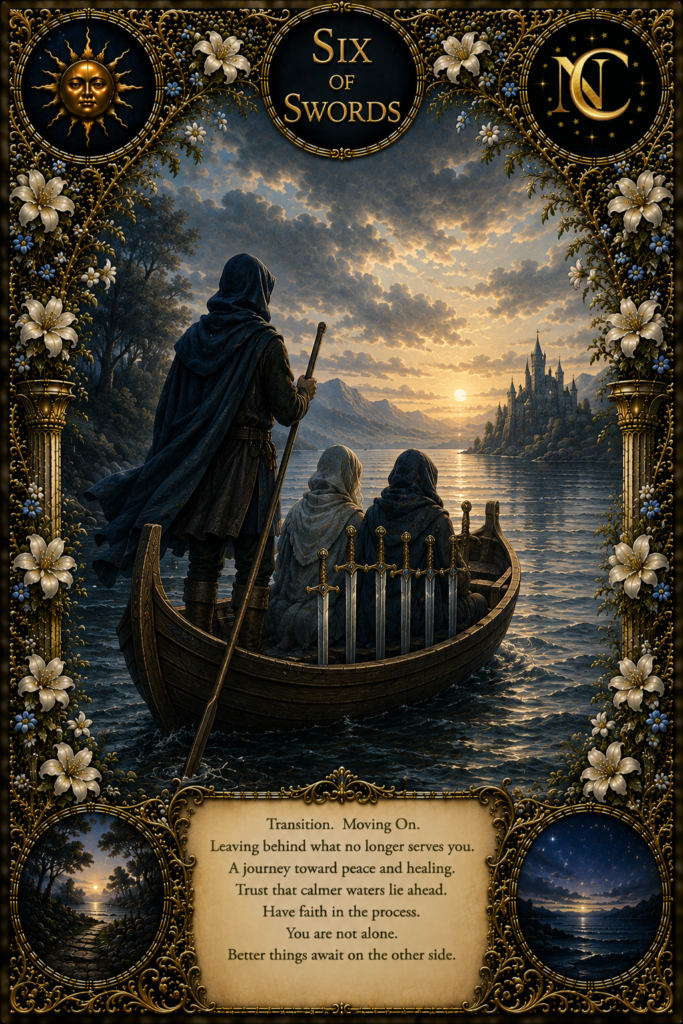
A boat carries passengers and six swords across water from rougher to calmer conditions. The swords travel with them, implying that change of place helps but does not automatically erase the past.
At its centre, this card is about transition away from difficulty, carrying lessons and unresolved feelings into calmer territory The image should be read as a field of symbols rather than as a literal prediction. Notice which detail catches your eye first; in a real reading, that detail can show which layer of the card is most relevant.
Its rank is Six (6), representing adjustment; recovery, exchange and movement toward a more workable balance.
| Property | Details |
|---|---|
| Card Number | Six |
| Arcana | Minor Arcana · swords |
| Element | Air — TarotReading.in elemental correspondence |
| Modern Planetary Association | Mercury — Precise decan timing |
| Hebrew Letter | Not assigned as a standalone Hebrew-letter trump |
| Numerology | 6 — harmony, responsibility and integration |
| Modern Chakra Association | Throat Chakra |
| Yes / No | Generally Yes. |
| Timing | Approx. Jan 30–Feb 8 · Precise decan timing |
| Keywords | Transition, Moving On, Recovery, Travel, Mental Shift, Leaving Difficulty |
Editorial note: Tarot correspondences differ across decks and schools. Historical/esoteric associations are distinguished here from modern TarotReading.in chakra, planetary and crystal pairings.
Upright, Six of Swords emphasizes transition, moving on, recovery when these qualities are expressed consciously.
Watch for stuck in transition, returning, unfinished issues, resistance. The reversal may be blocked, delayed, excessive or internalised rather than automatically negative.
What would the mature expression of transition look like here, and what evidence would distinguish it from stuck in transition?
Choose one observable action that expresses transition while reducing stuck in transition.
Read this as a balance: Six of Swords concentrates most strongly in Transition, Moving On and Recovery. The remaining bars are strong supporting currents whose expression depends on the question and surrounding cards. Read the profile as transition without sliding into carrying the past.
Threshold / Beginning
Six of Swords expresses a stage of learning through the card’s central theme.
Six of Swords belongs to the Minor Arcana suit of swords. Numbered and court-card suits descend from the playing-card structure that accompanied Tarot’s trump sequence in early European decks.
The Rider–Waite–Smith deck of 1909 gave the Minor Arcana fully illustrated scenes, making Six of Swords easier to interpret through posture, environment, objects and visual tension as well as through suit and number.
Contemporary reading usually combines the suit’s element (Air) with the developmental role of six. This page keeps those interpretive layers separate from claims about fixed prediction.
A boat carries passengers and six swords across water from rougher to calmer conditions. The swords travel with them, implying that change of place helps but does not automatically erase the past.
Boat acts as a journey and passage symbol in Six of Swords. It reinforces movement across emotional or practical distance, especially the card's upright themes of transition · moving on · recovery.
Ferryman acts as a human agency symbol in Six of Swords. It reinforces the attitude, role or behaviour through which the card becomes lived experience, especially the card's upright themes of transition · moving on · recovery.
Woman and Child acts as a innocence and renewal symbol in Six of Swords. It reinforces openness, memory, trust and emerging possibility, especially the card's upright themes of transition · moving on · recovery.
Six Swords in Boat acts as a thought and discernment symbol in Six of Swords. It reinforces truth, communication, decision and the cutting edge of clarity, especially the card's upright themes of transition · moving on · recovery.
Water acts as a emotional flow symbol in Six of Swords. It reinforces feeling, intuition, transition and the movement of inner life, especially the card's upright themes of transition · moving on · recovery.
Distant Shore acts as a symbolic emphasis symbol in Six of Swords. It reinforces a visual clue that concentrates the card's larger lesson, especially the card's upright themes of transition · moving on · recovery.
Taken together, these visual details turn Six of Swords into a study of transition · moving on · recovery and the choices those themes invite.
General / Energy
Six of Swords expresses the adjustment stage of Air through transition away from difficulty, carrying lessons and unresolved feelings into calmer territory. Upright, the card tends to show the suit's energy moving in a recognisable and usable form. Look for themes of transition, moving on, and recovery, especially where thought, communication, decisions, conflict, truth and the stories the mind creates are concerned. The practical lesson is to recognise progress while correcting what still remains unequal.
Career / Work and Finances
For career and finances, this card highlights strategy, communication, analysis, contracts, decisions, intellectual work and handling conflict. It can show a period when transition or moving on becomes especially important. Because the Six represents recovery, exchange and movement toward a more workable balance, the strongest practical move is to make your next decision measurable: define what progress would look like, what resources are required, and what must be stopped, delegated or improved.
Relationships / Love
The mature expression of Six of Swords develops transition and moving on while staying alert to stuck in transition and other shadow expressions.
General / Energy
Reversed, Six of Swords may show overthinking, harshness, fear, argument, mental exhaustion or confusing thoughts with facts. The card can manifest as stuck in transition, returning, or unfinished issues, but context matters: sometimes the energy is not absent at all—it is happening privately, excessively, too early or too late. Read the reversal as a diagnostic question: what part of the upright lesson cannot flow naturally yet?
Career / Work and Finances
At work, the reversal can show friction around strategy, communication, analysis, contracts, decisions, intellectual work and handling conflict. Watch for stuck in transition and returning, especially if you are measuring worth only through short-term results. Financially, slow the decision down enough to separate a real constraint from fear, habit or disorganisation, then correct the specific weakness rather than abandoning the whole plan.
Relationships / Love
Ask which of these shadow themes is observable now: stuck in transition, returning, unfinished issues, resistance.
A couple may move beyond conflict, or one person may leave a painful bond to find peace. Emotional baggage may keep the old conflict alive despite changed circumstances.
A job change, transfer or calmer professional phase can support recovery. Fear or unfinished responsibilities may complicate the move away from a stressful workplace.
Financial recovery may be gradual but is moving in a more stable direction. Old debts or habits may follow you until they are addressed directly.
Transition can become a quiet spiritual journey from turmoil towards acceptance. Seeking peace without processing grief may create spiritual avoidance.
Distance from family conflict can create safety and a chance for clearer communication. Physical distance alone may not resolve an emotional pattern carried internally.
Choose the path that reduces ongoing harm and creates room for recovery. Before returning, ask whether anything meaningful has actually changed.
Choose the life area closest to your question, then compare Six of Swords's upright and reversed expressions without treating either as a fixed prediction.
Use this guidance for reflection alongside the card’s spread position and surrounding cards. It does not replace professional medical, legal or financial advice.
Type a short question. This guide will take you to the most relevant interpretation already on this page.
In TarotReading.in’s interpretive framework, 6 is read through the theme of harmony, responsibility and integration. In Six of Swords, that stage meets Air and the imagery of the Swords suit.
Harmony describes the developmental pressure carried by this card.
Responsibility shows how the number shapes the situation without predicting a fixed event.
Integration becomes practical in Six of Swords through the question: how can transition away from difficulty, carrying lessons and unresolved feelings into calmer territory be expressed with more awareness?
Six of Swords expresses the number through transition away from difficulty, carrying lessons and unresolved feelings into calmer territory.
Compare the four 6-ranked Minor Arcana cards to see how the same numerical stage changes through Fire, Water, Air and Earth.
Six of Swords uses the traditional correspondence layer Mercury in Aquarius. Its timing ruler is Mercury, with Air providing the elemental context used on this page.
In later Western occult study, Six of Swords can be read through astrology, element, number and—where appropriate—Hebrew-letter correspondences. These systems are later interpretive frameworks rather than Tarot’s original historical meaning.
This numbered Minor Arcana card belongs to one of the 36 ten-degree zodiacal decans used in the Golden Dawn Tarot correspondence system. Read the sign as the territory, the planetary ruler as the actor, and the card as the drama.
The sign describes the environmental tone and baseline motivation.
The planet describes the force, pressure or style driving events.
Science / transition
Blend Aquarius as the territory, Mercury as the actor, and Six of Swords as the Tarot drama. The degree range is the authoritative anchor; calendar dates are approximate and can shift slightly by year/source.
Astrological correspondences are an interpretive timing layer, not a guarantee that an event must occur on a fixed date. For decan cards, degree boundaries are more precise than civil calendar dates, which can shift slightly by year and source.
Live observer astronomy and a separate card-specific Tarot interpretation layer for Six of Swords. The sky adds context; it never replaces the card’s own reading.
 MERCURY // CARD CORRESPONDENCE TARGET
CINEMATIC SCALE: sizes retain a recognizable relative hierarchy; orbital spacing is compressed for readability and is not a literal distance scale.
In a live-sky reading, Six of Swords should still be read first through transition, moving on and recovery. Celestial timing can highlight travel and mental shift; the reversed position may shift the story toward stuck in transition or returning.
Traditional timing: Blend Aquarius as the territory, Mercury as the actor, and Six of Swords as the Tarot drama. The degree range is the authoritative anchor; calendar dates are approximate and can shift slightly by year/source.

Production observer telemetry uses deterministic local calculations with optional JPL Horizons observer data. Tarot interpretation is independently authored by TarotReading.in and remains a reflective layer.
Approximate city-level location may be resolved from the visitor’s IP address to personalize the sky. The raw IP address is not displayed or stored by this plugin. Visitors can still request browser geolocation for a more precise observer position or return to the site default. Astronomy and Tarot are presented as separate layers.
A person expressing Six of Swords may show transition, moving on, recovery, travel; in shadow, the same energy can become stuck in transition, returning, unfinished issues.
As feelings, Six of Swords can describe an emotional atmosphere shaped by transition, moving on, recovery.
As intentions, it points toward acting through transition while remaining aware of stuck in transition.
As advice, work consciously with transition while checking the practical facts.
As an outcome, the card suggests the situation may develop through transition, moving on, recovery, depending on choices and context.
As an obstacle, watch for stuck in transition, returning, unfinished issues, resistance.
A past experience involving transition, moving on, recovery may still shape how this situation is being understood now.
In the present, notice how transition, moving on, recovery are influencing observable choices, reactions and conversations.
Looking forward, Six of Swords asks how you will work consciously with transition, moving on, recovery; its reversed or less-integrated expression may involve stuck in transition, returning.
Generally Yes. Six of Swords leans yes in a simplified yes/no framework. The answer remains conditional on the question, orientation, surrounding cards and real-world facts.
Timing style: Precise decan timing. Indicative window: Approx. Jan 30–Feb 8. Blend Aquarius as the territory, Mercury as the actor, and Six of Swords as the Tarot drama. The degree range is the authoritative anchor; calendar dates are approximate and can shift slightly by year/source. Treat this as reflective timing, not a fixed prediction.
When Six of Swords appears in a reading, bring the question back to its core lesson: Moving towards calmer conditions may still involve grief, transition and unfinished emotional work.
The card becomes more useful when you connect transition, moving on, recovery to something observable rather than treating the image as proof of a predetermined future.
Its shadow themes—stuck in transition, returning, unfinished issues—show what may need clarification, boundaries, patience or a different strategy.

Hold your question in mind and experience Nikita Chaturvedi’s FREE Virtual Tarot Reading—created to offer a thoughtful, personal moment of reflection whenever you need guidance.
Your next message may be waiting in the cards.
Name where transition is already visible.
Separate the constructive expression of Six of Swords from its shadow of stuck in transition, returning.
Choose one practical action that expresses transition without slipping into stuck in transition.
Check the result against real behaviour, evidence and consequences instead of relying on symbolism alone.
Write down the question in one sentence and identify which part of Six of Swords directly answers it.
Notice whether your first reaction comes from the image, a learned keyword or your own fear and preference.
Take one observable step, then return to the card after reality has given you new information.
Name where transition is already visible.
Combinations are not fixed equations. Read Six of Swords as one voice in a conversation, then ask how the neighbouring card changes the direction, intensity or practical expression of transition, moving on or the shadow pattern of stuck in transition.
Justice amplifies the deeper lesson behind transition . Together they ask whether the card's immediate situation is being handled with enough justice and fairness.
These cards show the same developmental stage expressed through different elements. Compare transition with generosity to see where two areas of life are supporting or competing with each other.
The Hermit amplifies the deeper lesson behind transition . Together they ask whether the card's immediate situation is being handled with enough soul-searching and introspection.
Six of Swords brings transition into conversation with Six of Wands's success. Consider whether Six of Wands reinforces, challenges, redirects or completes the situation described by Six of Swords.
Six of Swords brings transition into conversation with Six of Cups's nostalgia. Consider whether Six of Cups reinforces, challenges, redirects or completes the situation described by Six of Swords.
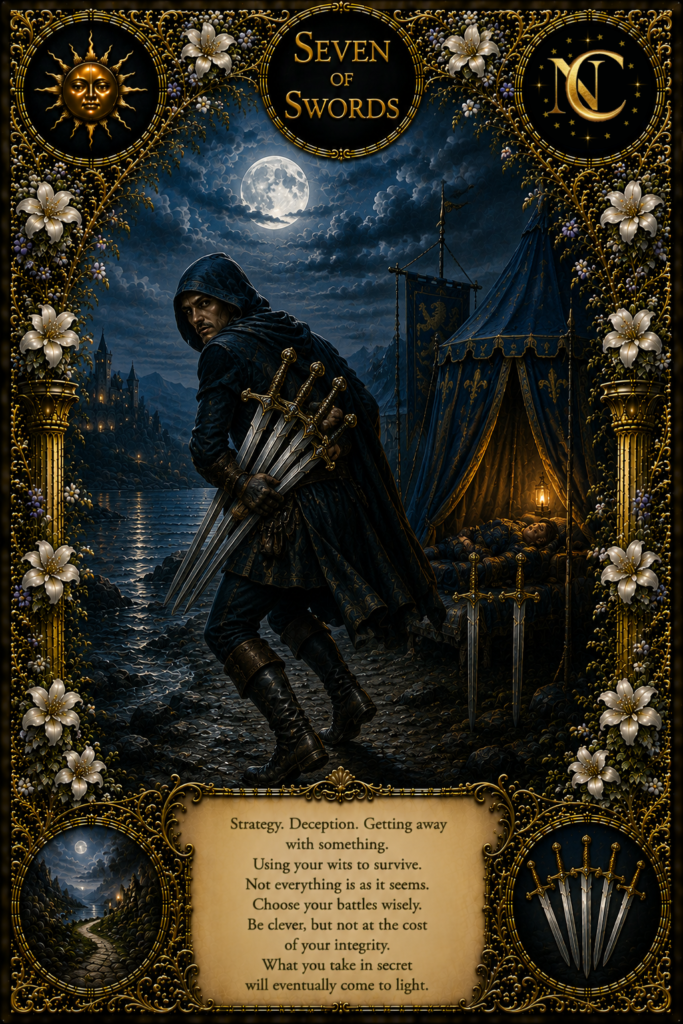
Six of Swords brings transition into conversation with Seven of Swords's strategy. Consider whether Seven of Swords reinforces, challenges, redirects or completes the situation described by Six of Swords.
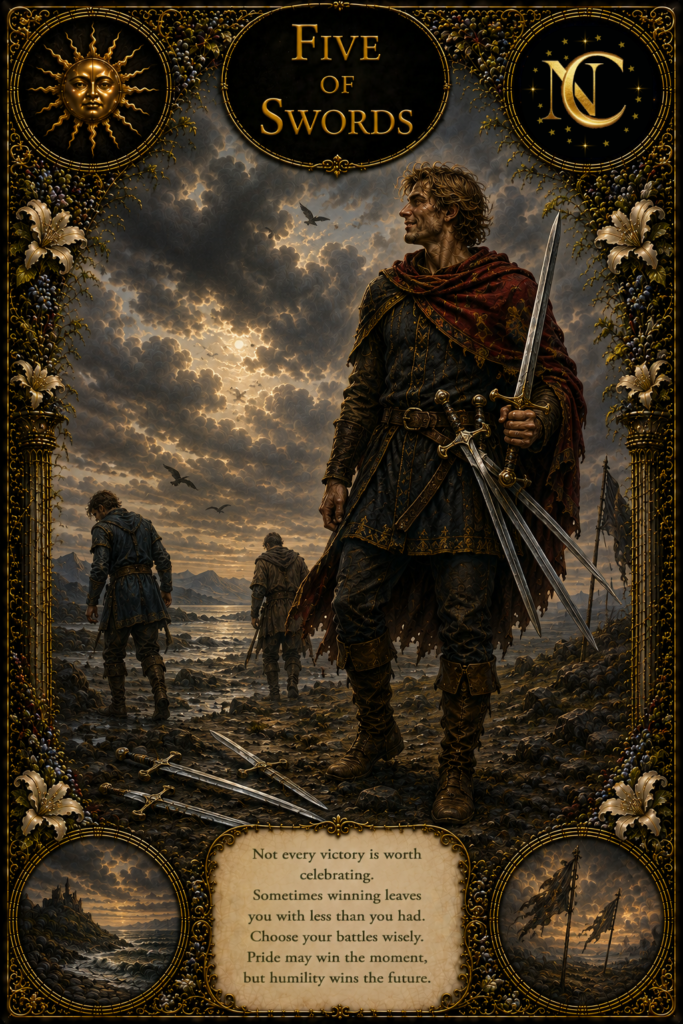
Six of Swords brings transition into conversation with Five of Swords's conflict. Consider whether Five of Swords reinforces, challenges, redirects or completes the situation described by Six of Swords.
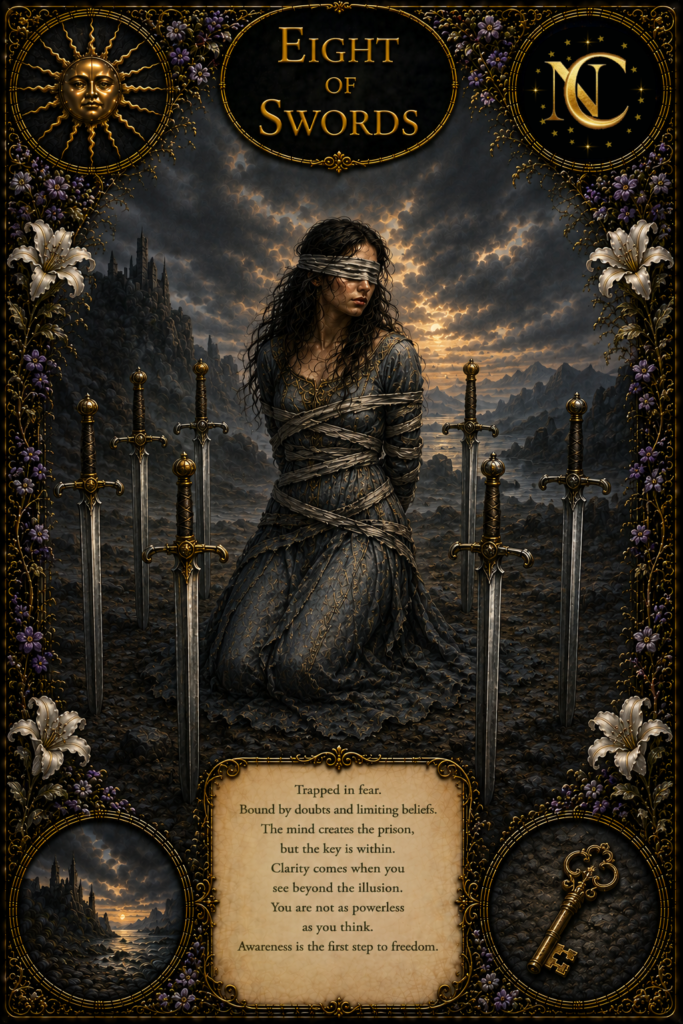
Six of Swords brings transition into conversation with Eight of Swords's restriction. Consider whether Eight of Swords reinforces, challenges, redirects or completes the situation described by Six of Swords.
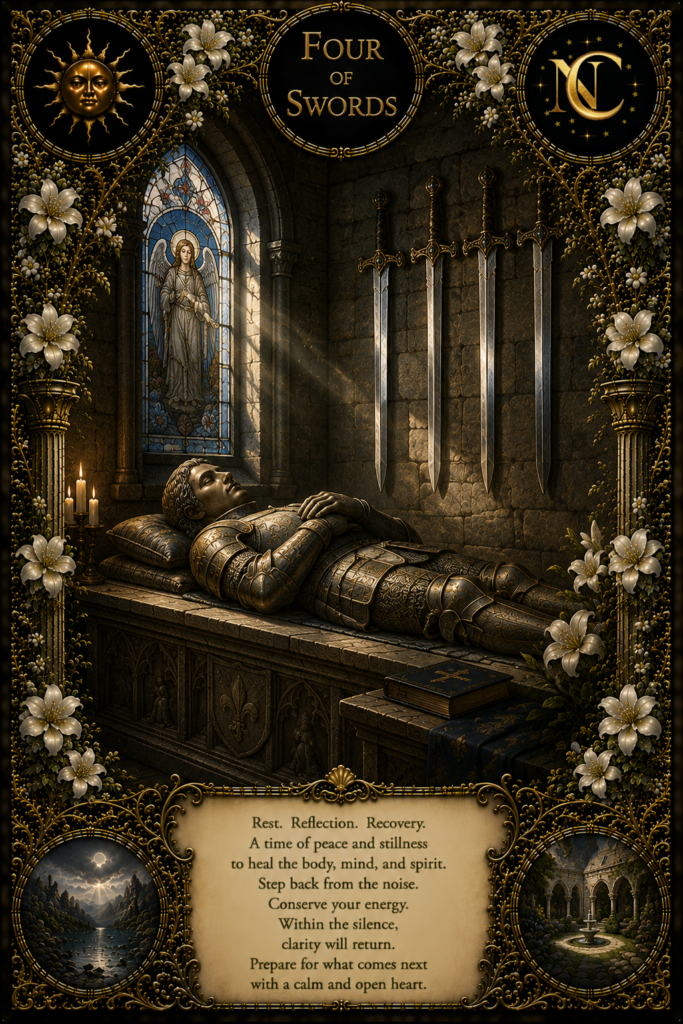
Six of Swords brings transition into conversation with Four of Swords's rest. Consider whether Four of Swords reinforces, challenges, redirects or completes the situation described by Six of Swords.
Six of Swords brings transition into conversation with Nine of Swords's anxiety. Consider whether Nine of Swords reinforces, challenges, redirects or completes the situation described by Six of Swords.
Six of Swords brings transition into conversation with Three of Swords's heartbreak. Consider whether Three of Swords reinforces, challenges, redirects or completes the situation described by Six of Swords.
Six of Swords brings transition into conversation with The Magician's manifestation. Consider whether The Magician reinforces, challenges, redirects or completes the situation described by Six of Swords.
Six of Swords brings transition into conversation with The High Priestess's intuition. Consider whether The High Priestess reinforces, challenges, redirects or completes the situation described by Six of Swords.
Six of Swords brings transition into conversation with The Emperor's authority. Consider whether The Emperor reinforces, challenges, redirects or completes the situation described by Six of Swords.
Six of Swords brings transition into conversation with The Lovers's love. Consider whether The Lovers reinforces, challenges, redirects or completes the situation described by Six of Swords.
Six of Swords brings transition into conversation with The Chariot's willpower. Consider whether The Chariot reinforces, challenges, redirects or completes the situation described by Six of Swords.
Six of Swords brings transition into conversation with Strength's courage. Consider whether Strength reinforces, challenges, redirects or completes the situation described by Six of Swords.
Six of Swords brings transition into conversation with Wheel of Fortune's cycles. Consider whether Wheel of Fortune reinforces, challenges, redirects or completes the situation described by Six of Swords.
Five of Swords expresses Conflict becomes destructive when winning matters more than dignity, trust or the wider cost.
Six of Swords expresses a developmental lesson shaped by transition, moving on and recovery.
Seven of Swords expresses Strategy and privacy require integrity because secrecy can easily become avoidance or deception.
Use this three-card spread when you want to explore Six of Swords through action rather than prediction. Place Six of Swords above the spread as a significator if you wish.
Where is Six of Swords already active in this situation?
What fact, boundary or perspective will help me express the card more maturely?
What practical action best honours transition while keeping stuck in transition in check?
Better reading:Six of Swords does not guarantee a literal event. Its imagery describes a pattern that should be tested against context.
Better reading:An upright card is not automatically good and a reversed card is not automatically bad. Both can contain constructive and difficult expressions.
Better reading:The strongest reading keeps personal agency intact: use Six of Swords to examine choices, not to claim certainty about another person’s private thoughts.
Six of Swords combines its visual narrative with its Six — Adjustment; recovery, exchange and movement toward a more workable balance. In modern Tarot practice, that means the same card can describe an outer situation, an inner attitude, advice, timing or a stage in a longer process depending on the spread position.
A modern TarotReading.in pairing selected to complement Six of Swords's symbolic themes. This recommendation is editorial and reflective—not a historical Rider–Waite–Smith attribution.

Transition • Moving On • Recovery
Six of Swords and Clear Quartz work well as a contemplation pair because both can be used to focus attention on transition, moving on, recovery. The crystal does not change the card’s meaning; it provides a tangible object for reflection.
Use the pairing when journaling, setting an intention before a reading or creating a simple visual focus. Keep the practice grounded in your actual question and choices.
If you use crystals physically, care for them according to their mineral properties and avoid medical claims. The pairing is symbolic and editorial.“How can I strengthen transition in this situation, and what would help me avoid stuck in transition?”
A modern TarotReading.in pairing selected to complement Six of Swords's symbolic themes. This recommendation is editorial and reflective—not a historical Rider–Waite–Smith attribution.
TarotReading.in pairs Six of Swords with Clear Quartz. The pairing highlights the card's themes of transition, moving on, recovery alongside the crystal’s commonly used reflective symbolism.
Six of Swords becomes easier to understand when read beside cards that echo, challenge or develop its themes of transition, moving on, recovery

Six of Swords commonly points to transition, moving on, recovery. Its upright keywords include transition, moving on, recovery, travel.
In a simplified yes/no reading, Six of Swords generally leans yes. Context and orientation still matter.
A couple may move beyond conflict, or one person may leave a painful bond to find peace. Emotional baggage may keep the old conflict alive despite changed circumstances.
A job change, transfer or calmer professional phase can support recovery. Fear or unfinished responsibilities may complicate the move away from a stressful workplace.
Its rank is Six (6), representing adjustment; recovery, exchange and movement toward a more workable balance.
TarotReading.in pairs Six of Swords with Clear Quartz as a modern editorial crystal correspondence. The pairing is symbolic rather than a historical Rider–Waite–Smith attribution.
Use these quick links to jump directly to interpretations already covered in this guide.
Tarot structural metrics, card correlations, and analytical breakdowns serve strictly as reflective frameworks for decision support, personal insight, and creative contemplation. They do not dictate rigid outcomes and should never be used as a replacement for certified medical, legal, financial, or psychological counsel.
Six of Swords begins the journey. Continue into The Magician, explore the Major Arcana, or discover the crystal correspondences that connect TarotReading.in's Tarot and Crystal Encyclopedia.

TarotReading.in, founded by Nikita Chaturvedi, whose vision is to create a modern platform where spirituality, wisdom, and technology come together to help people navigate life’s most important decisions. With a passion for tarot and intuitive guidance, Nikita believes tarot is not about predicting a fixed future, it is about empowering individuals with clarity, perspective, and self-awareness. Through TarotReading.in, she aims to make authentic tarot reading accessible while fostering a supportive community for seekers across India and beyond.
© TarotReading.in | All rights reserved. 2026